Property owners ask this every spring, usually after a second season of fighting tall grass or a winter that made the rider look small. The honest answer to can a small tractor replace a riding lawn mower is yes — if you match the tractor, the mower, and the tires to the lawn you have, and you will trade a little mowing speed for more capability.
This is not a hobby-farm buying guide. It is tractor vs riding mower for lawn and property work: snow, wood, gravel, brush, and a few acres that do not behave like a suburban lot.
What each machine is actually for
A riding lawn mower — lawn tractor or zero-turn — is a specialist. The deck hangs under the machine, the tires are turf-friendly, and the package is light and quick on open grass. On a kept lawn, nothing a small tractor does will feel faster than a decent zero-turn. A rider will not grade a driveway, move stone, lift firewood, or throw a meaningful amount of snow. Stretch it into those jobs and you get a clogged deck, a cooked belt, or a second machine you did not plan to buy.
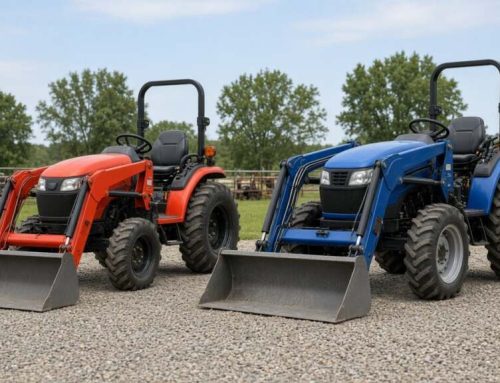
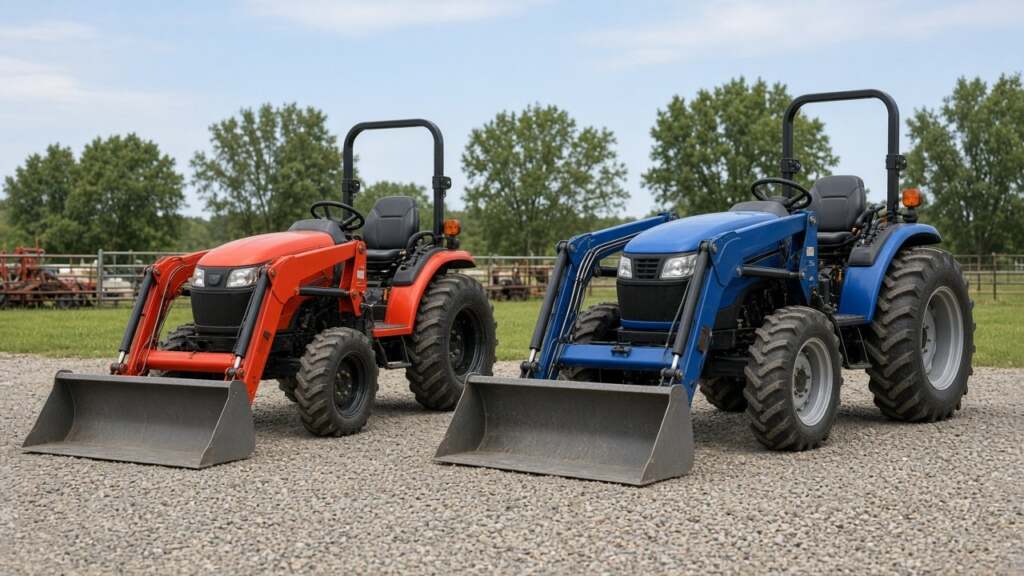
A small tractor in the subcompact and compact class — the 20 to 29 horsepower machines Keno Tractors sells from TYM, Branson, Jinma, and Mahindra — is a power unit with a three-point hitch, a PTO, and usually a front loader. A rider is a mower. A tractor runs a mower. You choose the deck to match the grass. The tractor mowers Keno stocks are different tools, not deck-size upgrades of the same thing.
If your year is 30 mowing days and nothing else, keep the rider. If mowing shares the calendar with rental-yard jobs, keep reading.

Finish cut vs bush hog
A finish mower is the lawn tool. Two or three blades spin at high tip speed under a low deck. The cut is even, the clippings are small, and the height is in the same range as a riding mower. On turf you already maintain, this is what makes a small tractor a credible replacement.
A bush hog / rotary cutter is the rough-ground tool. Heavy blades knock down tall grass, weeds, briars, and light brush. The cut is functional, not pretty — streaks, longer stubble, and brown tips on anything you treated like a lawn.
If you would be embarrassed to skip a week, you want a finish mower. If you are reclaiming a field or keeping a fence line visible, you want a rotary cutter. Many 2-to-5-acre places need both: finish mower by the house, cutter in the back.

Mid-mount vs rear mowers
Mid-mount (belly) mowers sit under the tractor the way a rider’s deck does. You see the cut in front of you, and turning around a tree feels closer to a lawn tractor. On a kept lawn, this is the closest substitute for a riding mower. The tradeoff: the deck often has to come off for a tiller, a hard-used box scraper, or some loader jobs, and not every compact frame takes a mid-mount.
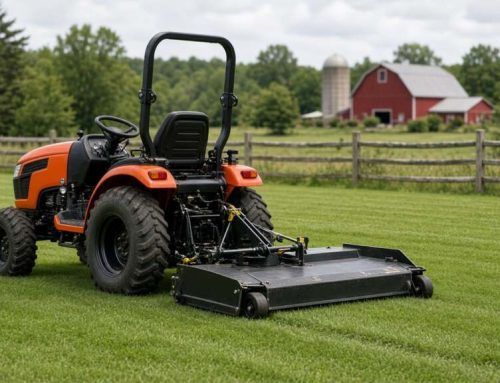
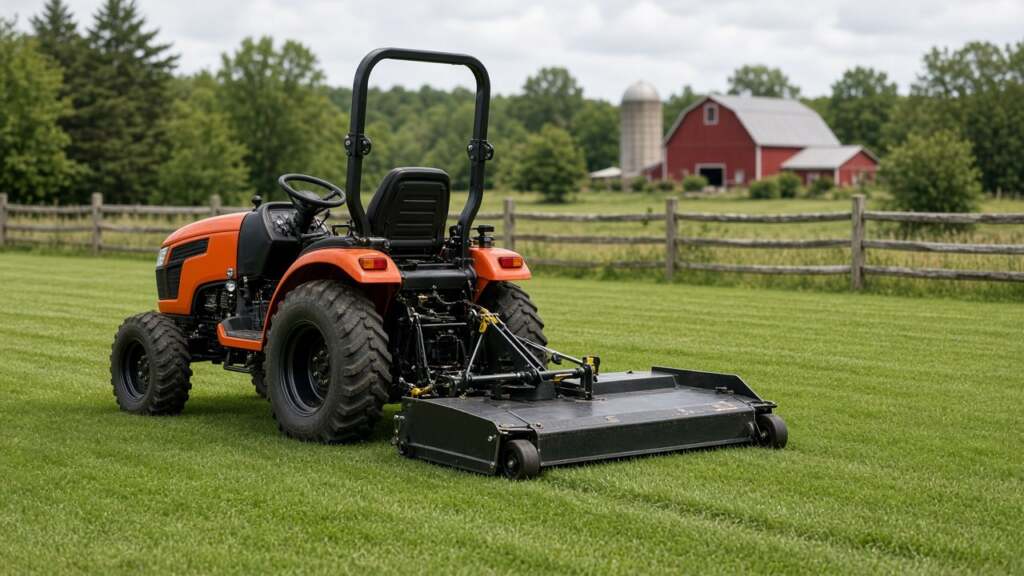
Rear-mount finish mowers hang on the three-point hitch. They fit more tractors, follow ground contours on their own, and drop off in a few minutes when you need the hitch. The tractor sits on grass the mower has not cut yet, so the first pass along a building is not as tidy as a mid-mount or a zero-turn.
Weekly lawn? Mid-mount. Mower sharing time with a scraper, blade, and cutter? Rear-mount is the more honest daily driver.
Turf tires vs ag tires, and lawn compaction
Tires decide whether the tractor marks the yard.
- Turf (R3): wide, shallow tread. Floats better on lawn and does not chew sod on a dry turn. Spec these if the main job is still the yard.
- Ag (R1): deep lugs. Pull in mud, snow, and loose dirt. Also print a herringbone in wet turf and can tear a manicured lawn on a sharp turn.
- Industrial (R4): the middle. Common when you mow and load gravel or push snow.
A small tractor outweighs a rider by a wide margin. On dry, established turf with turf or industrial tires, most people live with the tracks. On wet ground, or on a lawn seeded last fall, that weight shows up as compaction: yellow paths, puddles in the wheel lines, and thin grass where you turn every Saturday. Stay off saturated soil, vary the pattern, and skip ag tires on a show lawn.

When a riding mower still wins
Keep the rider when most of these are true:
- Mostly kept turf, often under two acres, with beds, fences, and tight turns
- You already own a zero-turn that finishes the lawn in a time you like
- No snow work, firewood, gravel, or brush a string trimmer cannot handle
- Storage is a standard garage, and you do not want to give a parking space to a loader
- The lawn is the product — in-town, HOA, or a yard that has to look “mowed,” not just maintained
In those cases a tractor is not an upgrade. It is a heavier specialist in the wrong job. Minutes-to-mow on a mowing-only schedule favor the rider.
Can a small tractor replace a riding lawn mower on 1–5 acres?
One to five acres is enough lawn to keep a rider busy, and enough other work to make a second machine feel inevitable. A small tractor becomes the better single machine when the week is not just grass:
- Snow. A front blade or blower is a different class of tool than a walk-behind or a rider-mounted thrower. Long lanes are why a lot of riders get parked in November.
- Loader work. Gravel, mulch, manure, dirt, and firewood. A front loader retires the wheelbarrow and the “I’ll hire it out” reflex.
- Wood and brush. Deadfall, trail edges, and a back line that grows up every June are rotary-cutter and loader work.
- Driveway care. A box scraper or rear blade after a rain, or after the plow pile melts.
- Mixed surface. House lawn plus a paddock, orchard floor, or field edge. Finish mower on the lawn; cutter on the rest.
The better question is whether one tractor can replace the rider, the snowblower, the rented scraper, and the weekend stacking wood by hand. For many 1-to-5-acre owners, it can.
Hydrostatic drive, and time vs capability
Most riding mowers people like use hydrostatic drive: push a pedal, go, ease off, stop. An HST tractor is the same idea with more weight behind it. You can creep along a fence without thinking about a shuttle lever. Gear or shuttle tractors still earn their keep on tillage, but they are a worse stand-in for a rider. If the tractor is supposed to replace the mower, specify HST. You can work a loader from an HST seat. You cannot make a gear tractor feel like a lawn tractor.
A zero-turn on open turf will usually beat a small tractor around the lawn. The tractor turns wider and a rear mower needs overlap. If the only number you care about is minutes to mow the front, the rider wins. Capability is the other number. The rider is done after the grass; the tractor is still useful for gravel, chips, and the back paddock. Count the hours you used to spend on rentals, second machines, and jobs you put off. A riding mower optimizes the lawn. A small tractor optimizes the property.
What goes wrong if you use the wrong machine
Bush hog on a lawn. Scalp, streak, and brown turf. Wrong tool, not a dull blade.
Finish mower in heavy brush. Rocks, stumps, and woody stalks bend blades and wreck spindles.
Ag tires on wet turf. Deep lugs plus weight plus a tight turn equals torn sod and season-long ruts.
Tractor on saturated ground. Compaction shows up weeks later as thin, yellow tracks. Wait a day.
Rider in a neglected pasture. Tall, wet grass packs the deck and cooks belts. You needed a cutter, not a bigger rider.
Mid-mount left on for the wrong job. Low clearance, a clipped deck, and an afternoon unbolting it to scrape the driveway.
Buying horsepower and skipping the mower spec. A 25-horsepower tractor with the wrong deck still cannot replace a riding mower. The mower and the tires do that job.
Expecting zero-turn manners. A compact will not thread a courtyard of raised beds. If that courtyard is half your mowing, keep a small rider.
How to decide without guessing
Walk the property once with a notepad.
- Measure the kept lawn, not the deed. How many acres are actually turf?
- List the non-mowing jobs you did last year, including work you hired out.
- Note the tightest turn you care about and the wettest ground you mow.
- Decide whether the lawn has to look finished or just maintained.
- Choose the mower first (finish, rotary, or both), then the tires, then HST, then the horsepower band.
If steps 1 and 4 point to a pretty lawn and step 2 is empty, keep the rider. If step 2 is a real list and the lawn is 1–5 acres of mixed ground, a small tractor with a finish mower is the replacement — not a bigger riding mower.
Keno Tractors is a national dealer for TYM, Branson, Jinma, and Mahindra. For a second set of eyes, contact the team or call 866-363-8193 with your acreage, jobs, and how much you care about the cut.
FAQ
Can a small tractor replace a riding lawn mower?
Yes, if you spec a finish mower, turf or industrial tires, and — for weekly lawn work — hydrostatic drive. A tractor with only a bush hog is not a riding-mower replacement.
Will a small tractor compact or ruin my lawn?
It can, on wet turf with ag tires or the same path every week. Turf or R4 tires, staying off saturated soil, and varying the pattern keep most 1–5 acre lawns in good shape.
Mid-mount or rear finish mower?
Mid-mount feels closest to a riding mower. Rear-mount is faster to take on and off when you also run a scraper, blade, or cutter.
Do I still need a riding mower if I buy a tractor?
Keep a rider or walk-behind if you have tight landscaping the tractor cannot thread. Many owners sell the rider after one season with a mid-mount finish deck; some keep both on purpose.
What size tractor replaces a rider on a few acres?
For lawn plus snow, loader, and light brush, the 20–29 horsepower class is the usual starting point. Size the machine to the heaviest regular job, then make sure the mower and tires still suit the lawn.