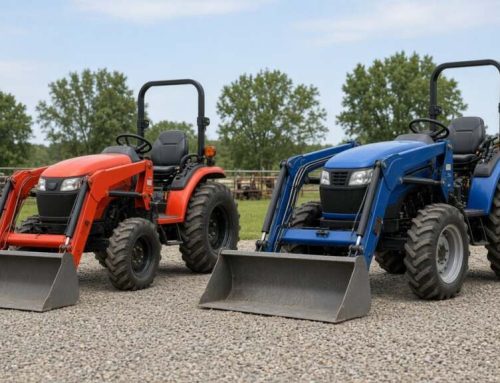
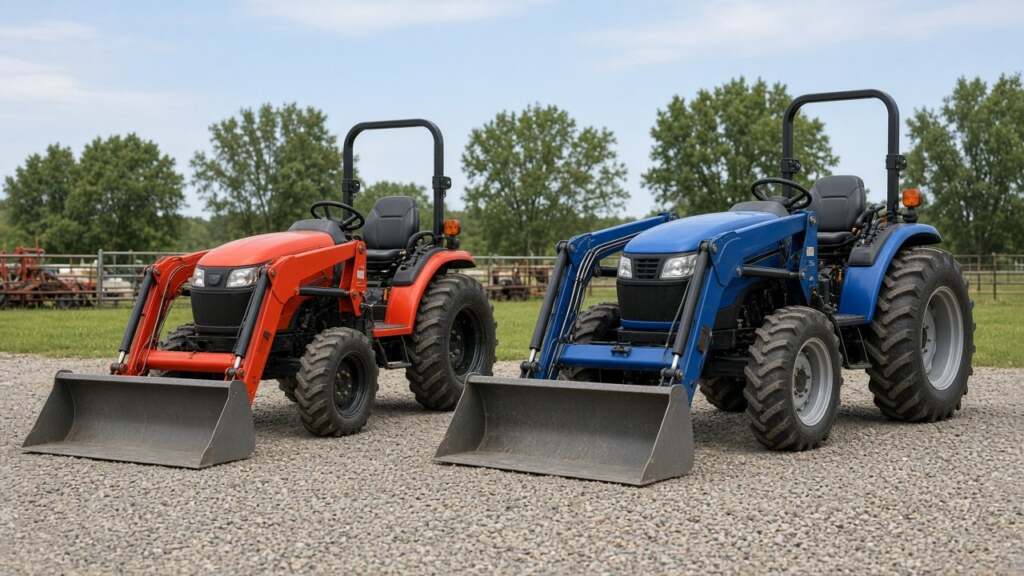
If you are asking how much horsepower do I need for a small tractor, the useful answer is not “buy the biggest number.” It is a match between the jobs you will do most weeks, the acres you cover, and the implements that actually consume power. Keno Tractors is a national online dealer in Keno, Oregon. We ship compact and utility machines nationwide — roughly 21 to 111 horsepower — with Category 1 three-point hitches, two-speed PTO, power steering, and ROPS. First-time buyers who stay happiest size the tractor to the work, not the figure painted on the hood.
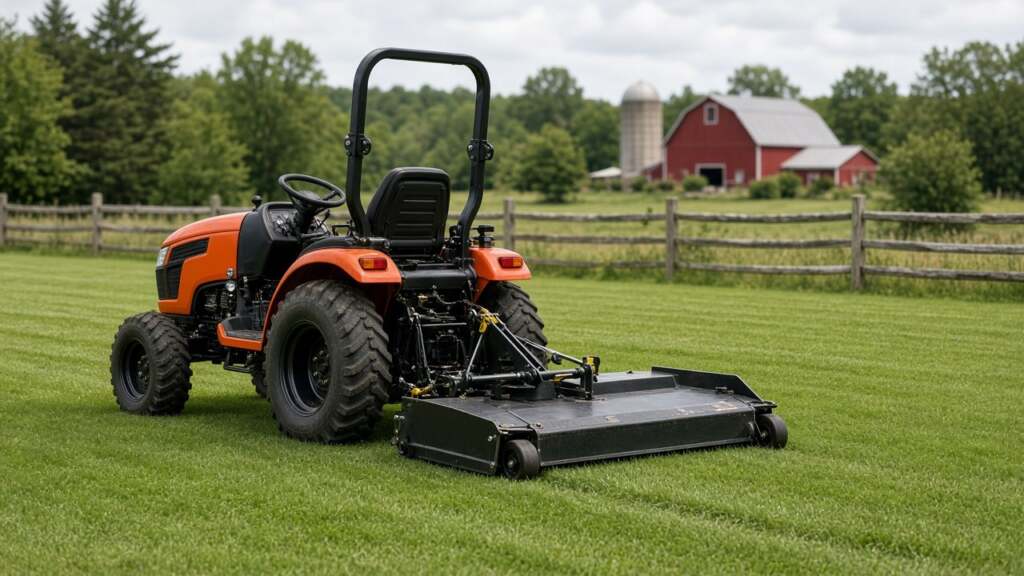
The brochure number is engine horsepower. That is not what turns a rotary cutter or a tiller, and it is not what lifts a pallet of feed. Those are PTO horsepower and loader lift. A 25-horsepower tractor on a finishing mower is a different machine than a 25-horsepower tractor asked to run a five-foot tiller in clay and a loader full of wet gravel.
Engine HP, PTO HP, and loader lift are three different numbers
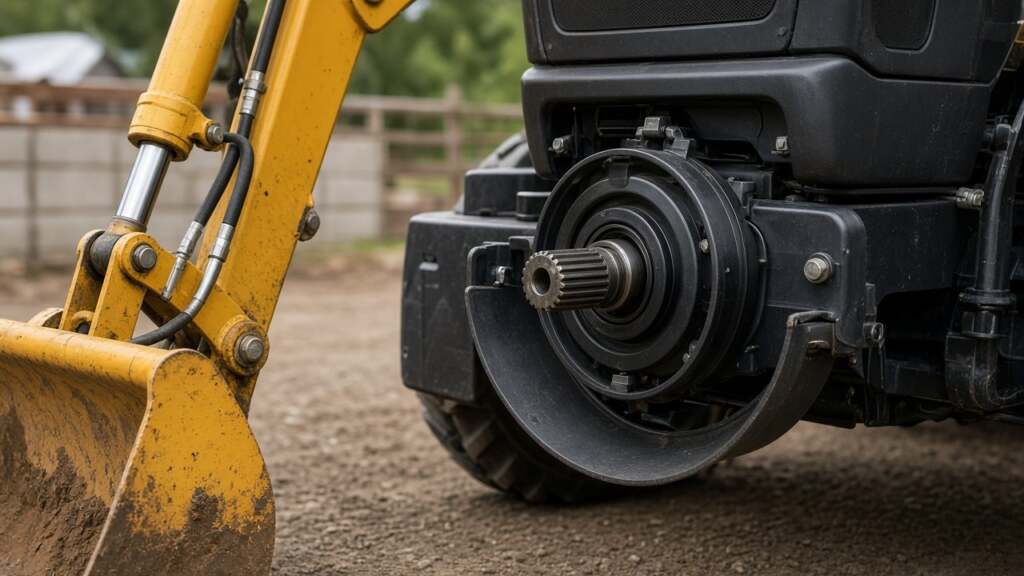
Engine horsepower is what the diesel makes at the flywheel. PTO horsepower is what is left at the shaft after the transmission, hydraulics, and cooling take their cut. On compact tractors the gap is usually several horsepower: a 25 engine-HP machine might put about 18 to 20 at the PTO; a 48-horsepower compact might put high-30s. Implement makers rate cutters, tillers, and snow blowers by PTO HP. Compare only engine numbers and you will undersize the implement or overwork the tractor.
Loader lift is a third spec. It depends on hydraulic flow, cylinder size, geometry, and rear ballast — not raw engine HP. Two tractors with the same engine rating can have very different lift at the pin. A subcompact in the low 20s will move mulch, barn clean-out, and light snow. It will struggle with wet gravel or daily pallet work. When you shop front loaders, read lift at full height and breakout, then plan rear ballast so the front stays planted. Size to the heaviest PTO implement you run regularly, then confirm the loader. Do not size to a twice-a-year job.
Acres matter less than the jobs on those acres
Three acres of woods, stumps, and a steep driveway is harder work than twenty acres of already-mowed pasture. Acreage tells you how many hours you will sit in the seat. The jobs tell you how much power you need while you sit there.
A reasonable starting map, not a law:
- Under about five acres, mostly lawn, light snow, occasional dirt: the 20 to 29 horsepower band is often enough if implements stay in the four-foot class.
- Five to fifteen acres with regular loader work, a rotary cutter, and some tillage: 30 to 40 horsepower so you are not living at wide-open throttle.
- Fifteen to forty acres, heavier soil, more hours, or a six-foot cutter and a five- or six-foot tiller: 40 to 50 horsepower starts to feel like the right size.
- Commercial hours or larger hay equipment: you are leaving “small tractor” and looking at the upper compact and utility end of the tractor lineup. At Keno that runs through TYM (Branson is now under the TYM brand), Jinma, and Mahindra.
Small property, heavy jobs — barn, manure, a garden you till every season — buy for the jobs. Large property, mostly mowing — stay lighter and put the difference into a better cutter. Packages change with loader, tires, and freight, so call 866-363-8193 for a quote or financing.
How much horsepower do I need for a small tractor by job?
Mowing. A finishing mower is light work. Twenty to 25 engine horsepower will keep a four- or five-foot finishing mower happy on a few acres. You are limited more by deck width and ground speed than by power. A rotary cutter (bush hog) is different. A four-foot cutter in light grass is fine on a 25-horsepower compact. A five-foot cutter in saplings wants more reserve — closer to 30 engine HP, and you still have to respect the cutter’s PTO rating. A six-foot cutter in real brush is a 35- to 45-horsepower conversation. A four-foot cutter you can keep at rated PTO speed will out-cut a six-foot deck you have to feather.
Front-end loader. Loader work is hydraulics, weight, and 4WD as much as horsepower. Daily scoop-and-dump — manure, chips, driveway gravel — is where a 30- to 40-horsepower compact earns its keep. A 25-horsepower machine will do the same jobs more slowly and with smaller bites, and it will bounce if you are short on rear weight. If the loader is your main tool, do not buy the lightest tractor that “comes with a loader.”
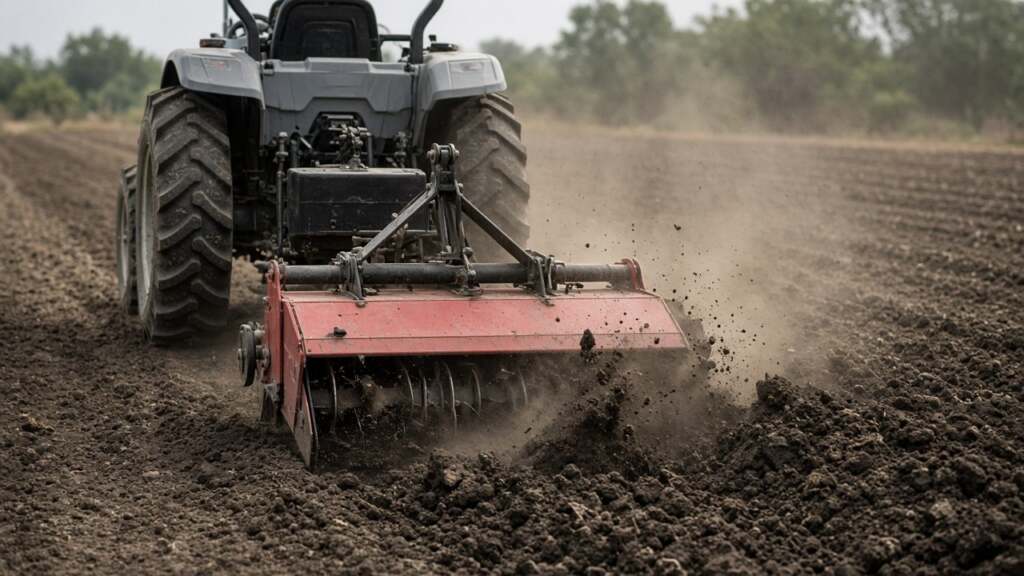
Rotary tiller. Tillage is how people find out they bought short. A common shop rule is five to eight PTO horsepower per foot of tiller width, more in clay. A four-foot rototiller is a realistic match for many 25- to 30-horsepower tractors. A five- or six-foot tiller is why people step into the 35- to 50-horsepower class. Garden twice a year? A four-foot tiller and a slower pass is enough. New ground every season? Buy the power.
Bush hog and land clearing. Light pasture clipping is mowing. Saplings, ditches, and fence lines are PTO work plus traction. Keep cutter width inside the tractor’s PTO rating, use a slip clutch, and do not confuse “it will spin” with “it will hold rated speed all afternoon.” Overheating, clutch glaze, and streaky cutting mean too little reserve.
Box blade, rear blade, and snow. These are draft and hydraulic jobs. A compact with a box blade will grade a driveway on 25 horsepower if you take light cuts. Frozen gravel and a full winter of snow argue for more weight and 4WD, not necessarily a much larger engine. A PTO snow blower follows the same PTO-per-width logic as a tiller.
Hydrostatic vs gear, and why 4WD belongs in the HP talk
Hydrostatic (HST) is what most first-time owners should buy if the week is loader work, mowing, and a lot of forward-and-back. You modulate speed with a pedal. The tradeoff is efficiency: long, constant-speed PTO work can run warmer and feel less locked-in than a gear tractor. Gear or shuttle still fits people who till a lot. HST does not add horsepower; it makes what you have easier to use on a loader.
Four-wheel drive is the other half of “enough power.” On dry grass, 2WD can look fine. Put a loaded bucket on the front, hit wet ground or a grade, and the rears spin while unused engine HP sits there. For loader work, slopes, snow, and anything off a finished driveway, take 4WD over a few extra advertised horses.
When 25 horsepower is enough — and when you need 35 to 50
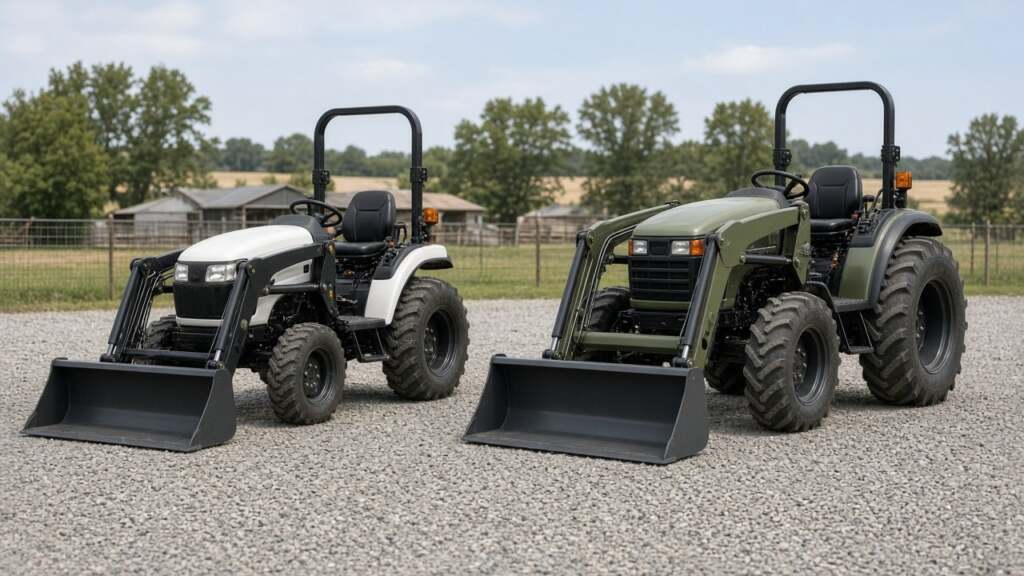
Twenty-five horsepower is enough when the property is modest, the lawn is the main job, the loader is occasional, and PTO tools stay in the four-foot class. Finishing mower, light rotary cutter, small tiller, box blade, and residential snow are a normal week. You will go slower in clay and take smaller loader bites.
You need 35 to 50 when any two of these are true: you run a five- or six-foot cutter or tiller; the loader is daily; the soil is heavy; the hours are real; or you are done borrowing a neighbor’s tractor for the one job yours cannot finish. The jump is staying out of the “wide open, still not enough” zone, which is where engines, clutches, and operators wear out. If you are between sizes, take the next band and call for a quote.
What goes wrong if you buy the wrong horsepower
Buying short is the common mistake. The tractor starts, the implement turns, and for twenty minutes it looks fine. Then the cutter leaves ridges because PTO speed droops. The tiller walks and the engine lugs. The loader gets light in the rear and you use speed instead of hydraulics to fill the bucket. Turf tears. In the worst cases you glaze a clutch, overheat, or lift a load on a slope you should not have tried with that much weight on the front. “It ran” is not “it was sized right.”
Buying long has a quieter cost. Too tall or too wide will not fit the barn aisle, the orchard, or the gate you already built. Extra weight that helps a loader will rut a wet lawn you only wanted to mow. You pay for capacity you use four times a year, and a bigger engine still will not make a mismatched cutter safe. The goal is the smallest machine that does the real work without living at the redline.
HP is not the only number that matters. Tires, 3-point lift, hydraulic outlets, and a real loader joystick matter as much as ten extra horses. A well-set-up 30-horsepower tractor with the right cutter beats a poorly ballasted 40 every week.
Write down the three jobs you will do most often, implement widths, and whether the loader is weekly or rare. Match PTO HP to the hungriest regular implement, loader lift to the material, transmission to the week you will actually have, and 4WD unless the machine never leaves dry flat ground. For a second opinion, call 866-363-8193 with the acres, the slope, and the implements — not just the horsepower you saw in a search.
FAQ
Is engine horsepower the same as PTO horsepower?
No. PTO horsepower is lower. Size cutters, tillers, and snow blowers to PTO HP, then confirm the tractor can hold rated PTO speed under load.
Can a 25-horsepower tractor run a front loader?
Yes, for light material and shorter sessions. Daily gravel, manure, or pallet work is more comfortable on a heavier 30- to 40-horsepower compact with 4WD and rear ballast.
How much horsepower for a five-foot bush hog?
Enough to keep that cutter at rated PTO speed in the brush you actually have — often the 30-horsepower class or above, not a stretched 21-horsepower subcompact.
Do I need more horsepower if I only mow?
Usually no. Deck width, ground speed, and a clean finish matter more than chasing 40 horsepower for lawn alone.
Is hydrostatic weaker than a gear tractor?
HST does not change rated engine HP. It is easier for loader and mowing work and can run warmer on long, heavy PTO jobs. Pick the transmission for the week you will actually have.
Should I buy extra horsepower “for resale”?
Buy the size that finishes your jobs. An oversized tractor that does not fit your gates is not a better asset.