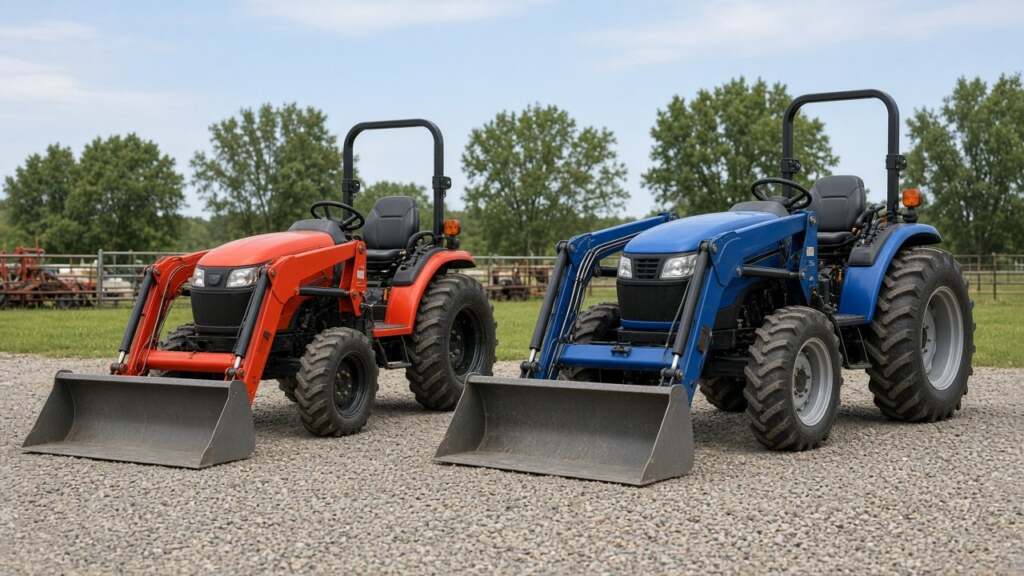
If you are shopping for a first small tractor, the compact vs subcompact tractor question is the one that keeps you from buying twice. It is not a brand fight. It is a class-size fight: frame weight, horsepower band, three-point hitch lift, loader muscle, tire size, and whether the machine still fits your shed, your gates, and the trailer you already own. Get the class right and a cheaper tractor does the work. Get it wrong and you stall a cutter that was always too big, or you park a machine that cannot turn in the yard you have.
Keno Tractors is a national online dealer in Keno, Oregon. We sell TYM, Branson (now TYM), Jinma, and Mahindra. The name on the hood matters less here than the class the machine sits in. Start with current tractors, then match the class to the heaviest job you will do every week.
The short, quotable answer: A compact vs subcompact tractor decision is a class-size decision, not a brand decision. A subcompact typically lives around 20–25 horsepower on a lighter frame — often in the neighborhood of 1,800 lb or under — and is built for mowing, light loader work, and tight properties. A compact typically starts around 25 horsepower and runs through 50+ horsepower, with more iron, more hitch lift, and more ballast for a front-end loader. Buy the class that matches your heaviest weekly job, not the one that looks toughest in a photo.
Compact vs Subcompact Tractor: How the Industry Draws the Line
There is no single stamp on the fender. “Subcompact” and “compact” are industry size classes, not a government grade.
Typical industry ranges:
- Subcompact: about 20–25 HP (some lists stretch toward ~30 HP). Lighter frame. Many sit around or under ~1,800 lb; some run a bit heavier. Lower stance, smaller tires, and a Category 1 or limited Category 1 hitch with modest lift. Built first for mowing, light material handling, and chores on a small place.
- Compact (compact utility): about 25–50+ HP, with some lines going higher. Heavier frame, more ballast, larger tires, more ground clearance, and a fuller Category 1 hitch. Built for mixed work: dirt, brush, livestock chores, and implements that would bounce a lighter machine.
The older compact-utility definition is a wider bucket (often under about 4,000 lb / 1,800 kg). “Subcompact” is the smaller slice inside that world. Horsepower is the number people memorize. Weight and hitch lift decide whether the job gets done.
Hitch Lift, Loader Capacity, and Why Weight Matters
Horsepower turns a PTO. Weight keeps the front end down when the bucket is full and the rear tires planted when a box blade bites.
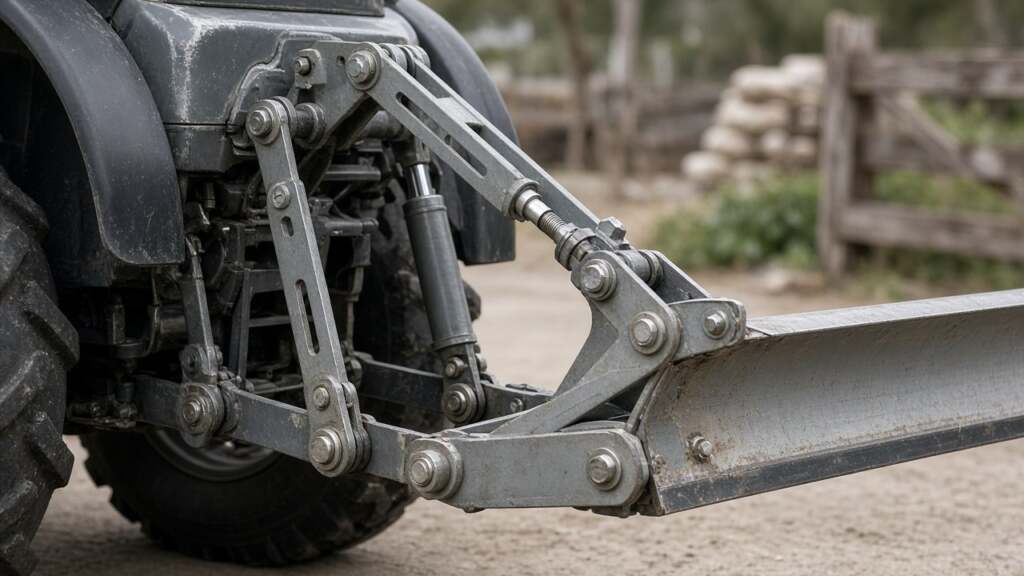
Most small tractors in these two classes wear a Category 1 or limited Category 1 three-point hitch. The pin size can look the same. The lift does not. A typical subcompact hitch will raise a light rear blade, a small box blade, a modest tiller, or a finishing mower sized to the tractor. Hang a heavy rotary cutter or a tiller spec’d for a bigger compact and the hitch either will not pick it up, or the front end will get light. A typical compact gives you more lift at the balls for a heavier cutter, a wider blade, or a soil-working tool. Read lift at the hitch ends. A rear implement is also ballast.
A front-end loader is why a lot of first-time buyers want a tractor instead of a riding mower. A subcompact loader is a real loader for light work: mulch, bagged feed, snow, brush, a scoop of dry dirt. Lift height and breakout are lower on purpose. The limiting factor is the tractor’s own weight. A light machine with a full bucket wants to stand on its rear tires — that is how people bend a loader or tip on a slope.
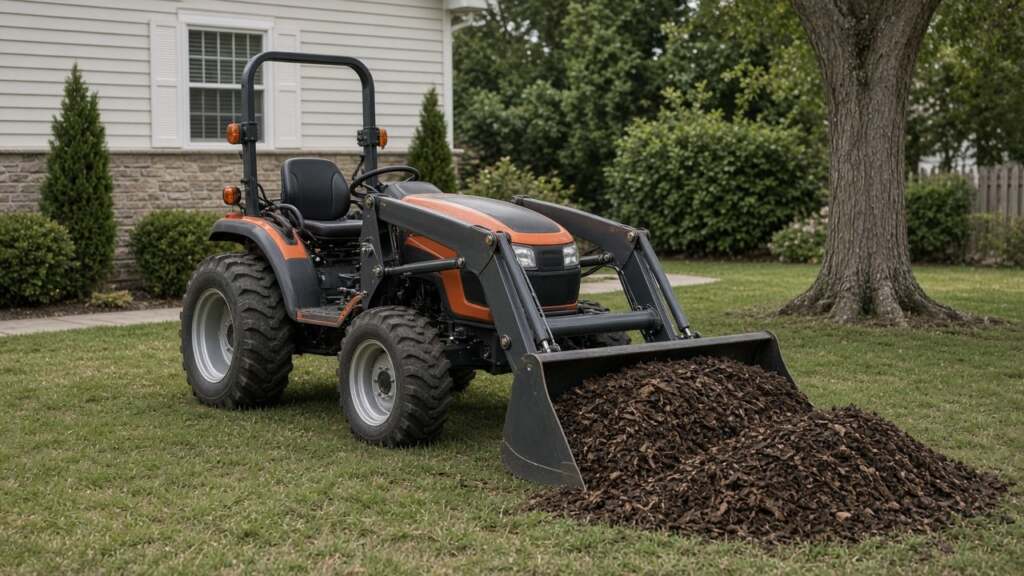
A compact loader keeps going: wet dirt, gravel, more hours of stacking, pallet forks with real weight. More machine weight is the ballast. If the loader is your main tool, shop class by tractor weight first and horsepower second.
Tires, Stance, and the Mower Deck
Tire size is the tell you can see from across the lot. Subcompacts wear smaller ag or turf tires and sit lower — better on a lawn, through a garden gate, and inside a one-car shed; worse in ruts, wet lanes, and deep snow. Ground clearance is the hidden spec. Compacts wear larger tires. They float better and put more rubber down for a loader, but they take a wider turn, need a taller door, and mark wet turf.
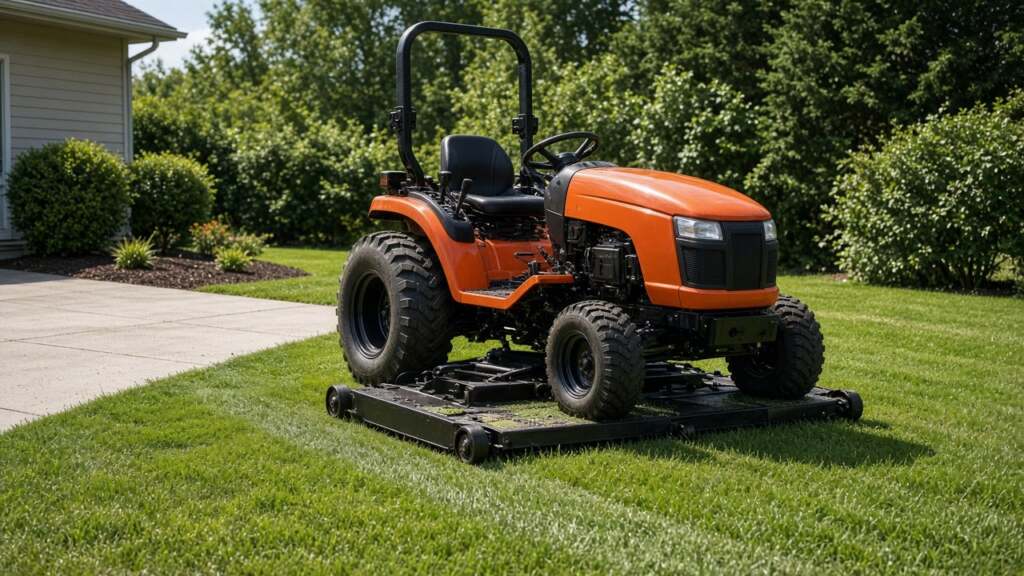
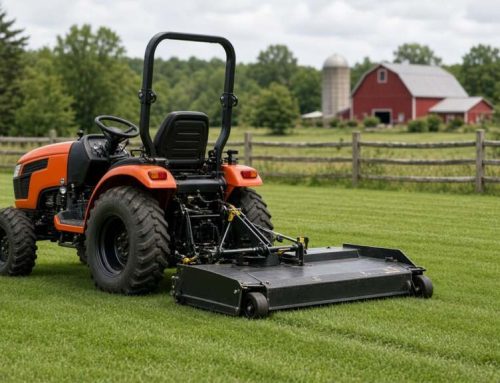
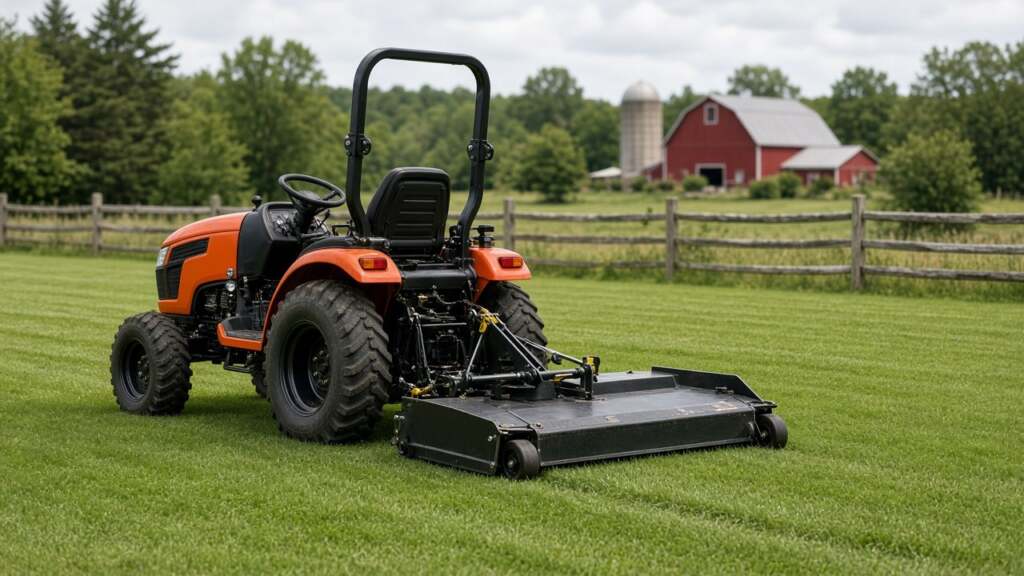
Mower decks follow the same split. Subcompacts often pair with a mid-mount finishing deck (commonly mid-50-inch to about 60-inch, depending on the machine). Compacts more often run a rear-mount finish mower or a rotary cutter in the 5- to 6-foot neighborhood — brush, pasture, and ditch lines a lawn deck was never meant to eat. Eighty percent kept-yard mowing? Subcompact plus deck. Eighty percent rough grass and saplings? Compact, and a cutter, not a lawn deck.
When a Jinma or TYM Subcompact Is Plenty
Plenty of first-time buyers over-buy because they imagine a hay field they will never plant. A Jinma or TYM in the subcompact / lower-20s-to-mid-20s horsepower band is enough for a few acres of lawn or light pasture, a garden you till a couple of times a year, driveway snow, and loader work that is mulch, small manure piles, branches, and the occasional scoop of dirt. It is also enough when the shed is tight, the gates are short, and your pickup and trailer GVWR actually cover the tractor’s shipping weight.
Keno’s 20–29 HP tag is the aisle for that buyer — TYM, Jinma, Mahindra, and related small machines. Some sit at the top of subcompact; some are small compacts. Overlap is normal. Pick by weight, hitch lift, and the implement, not the word on a brochure. A subcompact is a diesel with a PTO, a three-point hitch, and usually a loader — just a lighter one.
When You Actually Need a Compact
Step up a class when these are true most weeks, not once a summer: dirt, gravel, or wet material with the loader; a rotary cutter that stays in grass and saplings; a three-point implement sized for compact lift and PTO; mixed jobs on a bigger place (fence, barn, pasture, woodlot); more ground clearance and bigger tires; or a machine that stays planted with a loaded bucket without living on suitcase weights.
A compact is the right call when the subcompact would finish the job only by working too hard, too slow, or too close to its lift limit. That is how you wear out a small tractor in three seasons. You do not need a 70-horse utility to clean a barn. You need enough weight and hitch to do the work without drama.
Transport, Trailers, and Property Size
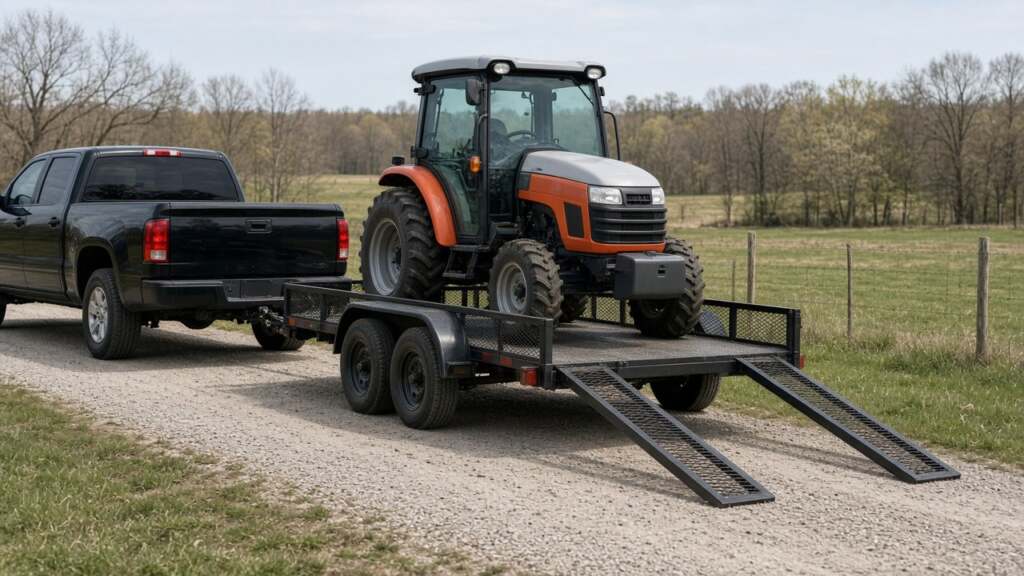
A typical subcompact is the one people can move with a pickup and a trailer they already own — if the trailer’s GVWR, axles, and ramps cover the tractor plus loader plus fluids. Check the shipping weight. Add a margin. A typical compact is heavier, longer, and often taller: heavier trailer, sometimes a three-quarter-ton instead of a half-ton, or skip the trailer and have it delivered. Keno ships nationwide. We are a dealer, not a plumber; we do not need to “swing by the house.” If the compact you need will not sit on the trailer in your driveway, that is a delivery conversation, not a reason to buy the wrong class. Measure the shed door and the ROPS.
Acres are a clue, not a rule. About 1–5 acres of kept ground often fit a subcompact for mowing, light loader, snow, and a garden. About 5–15 acres of mixed work is the overlap: mowing-only still fits a subcompact; fence, gravel, a bigger cutter, and livestock start asking for a compact. Fifteen-plus acres, or fewer acres with heavy dirt and brush, lean compact. A five-acre lawn is a subcompact job. A two-acre place with a driveway to build and a woodlot to keep open is a compact job. Count the work, then the acres.
What Goes Wrong If You Buy the Wrong Class
If you buy a subcompact for compact work, the loader lifts and the front end gets light. The cutter or tiller is too much PTO and too much hitch — you stall, you cannot raise it, or you bounce. Tires spin on wet dirt. You “make it work” for a season, then you shop again and sell the small machine to fund the compact you needed. On a slope, a light tractor with a raised, loaded bucket is not a personality test. It is physics.
If you buy a compact for subcompact work, it will not fit the shed or the garden gate. It is harder to trailer. It is more tractor than the lawn wants — turf marks, a wider turn — so the riding mower stays in rotation. You spent extra money, width, and fuel on capacity you will not use.
Wrong-class purchases are a mismatch between the photo in your head and the job on the calendar. Write down the three jobs you will do most weeks. Circle the heaviest one. That job picks the class. Then check the implement, the weight you can store and trailer, and only then the horsepower band. Brand comes last. TYM, Branson (now TYM), Jinma, and Mahindra all build machines in these classes. Compare weight, hitch, loader, tires, and deck. Call Keno at 866-363-8193 to sanity-check the class before you order.
FAQ
Is a subcompact tractor just a fancy garden tractor?
No. A garden tractor is usually a gasoline rider with a mower deck. A subcompact is a small diesel utility tractor: rear PTO, three-point hitch, and typically a loader option. Smaller class. Still a tractor.
How much horsepower is a compact vs a subcompact?
Industry ranges, not a law: subcompacts typically about 20–25 HP; compacts typically about 25–50+ HP. Some makers draw the line near 30 HP. Check weight and hitch lift. Horsepower bands overlap.
Can a subcompact run a front-end loader?
Yes. Keep the work in the light-material lane: snow, mulch, brush, modest dirt. Regular gravel, wet clay, and heavy forks are compact work. Tractor weight is the ballast that makes a loader honest.
Does property size decide the class by itself?
No. A few kept acres of lawn lean subcompact. The same acres plus grading, a big cutter, and livestock lean compact. Write the jobs first.
Questions about a specific machine? Contact Keno Tractors or call 866-363-8193.